INTRODUCTION
Children with tracheostomies have complex needs that require multidisciplinary care throughout development.1 Ventilatory support requirements, risk for frequent hospitalization, and fragile airways necessitate close monitoring by otolaryngology, respiratory therapy, speech-language pathology, and pulmonary medicine.2 Because a child’s complex medical needs can influence every aspect of family life, social work involvement is essential to support caregivers and promote family well-being.3 Care should be family-centered and supported by caregivers and the interdisciplinary team.4 Over time, caregiving dynamics may also change as family members age or experience shifts in their personal circumstances, which can further complicate long-term care planning for children with complex medical needs. As these children grow older, a critical need emerges to transition care from pediatric to adult services through deliberate planning that supports continuity, safety, and psychosocial well-being.5,6 The pediatric care model, which is highly family-centered and coordinated by a multidisciplinary team, differs markedly from the adult system, where care emphasizes patient autonomy and self-management when possible. Patients and families may find it difficult to adapt to this model because transition processes are often poorly standardized and may leave families with reduced resources and clinical support.7,8 An ineffective transition of care can result in hospital admissions, missed care needs, and loss to follow-up.9–11
In Alberta, pediatric tracheostomy care is typically coordinated through multidisciplinary clinics at tertiary pediatric centers such as the Stollery Children’s Hospital. These clinics bring together otolaryngology, respiratory therapy, speech-language pathology, nutrition, and social work to provide coordinated care for children with complex airway and ventilatory needs. However, comparable multidisciplinary programs dedicated to adult tracheostomy care are limited in many regions, and transition planning between pediatric and adult services often relies on informal coordination between providers.
Transition frameworks have been proposed for other pediatric populations with high care needs, such as neuromuscular disease, chronic respiratory failure, and liver transplant recipients.12–15 Within otolaryngology, there is limited research on the multidisciplinary coordination needed to support tracheostomy care transitions.5,16 However, literature on optimizing transition based on patient and family experiences remains limited.
This study aimed to assess needs and describe key priorities for a tracheostomy transition program as identified by caregivers, families, and care team members. Findings are intended to inform best practices and guide development of an optimized transition program for pediatric patients with chronic tracheostomy dependence.
METHODS
Institutional Ethics Approval
Institutional ethics approval was obtained from the University of Alberta Health Research Ethics Board – Human Health Sciences Panel (Pro00132321). All participants provided informed consent prior to participation.
Study Design
This qualitative study employed a thematic analysis approach to explore the experiences, challenges, and resource needs of caregivers and healthcare providers involved in the transition from pediatric to adult tracheostomy care. A semi-structured interview guide was developed by the research team based on the study objectives, clinical experience within the tracheostomy program, and transition-related issues identified in the literature. Separate interview guides were used for caregivers and healthcare professionals, and these are provided as supplementary material.
Setting and Participants
The study was conducted at the Stollery Children’s Hospital Pediatric Tracheostomy Clinic in Edmonton, Alberta, a quaternary-care multidisciplinary clinic that provides ongoing care for children with complex airway and ventilatory needs. Although pediatric tracheostomy patients represent a relatively small population, advances in pediatric care have resulted in an increasing number of children surviving with complex airway conditions requiring long-term tracheostomy management and eventual transition to adult services. A convenience sample of participants was recruited, including caregivers of tracheostomy-dependent adolescents within six months of turning or having turned 18 years of age, and members of the multidisciplinary care team. Formal thematic saturation was not assessed due to the limited number of eligible participants within this clinical population. As such, the findings should be interpreted as exploratory insights into transition experiences rather than a comprehensive representation of all caregiver and provider perspectives. At our institution, transition planning typically begins in late adolescence, with transfer to adult services generally occurring around 18 years of age, although factors such as clinical stability, caregiver readiness, and coordination with adult providers may influence the timing of transition. The healthcare participants included pediatric otolaryngologists, a nurse practitioner, respiratory therapists (RTs), a speech-language pathologist (SLP), and a registered social worker.
Recruitment
Potential participants were approached by the clinic nurse practitioner (SW) at the completion of their routine tracheostomy clinic visit and provided with an information package and consent form. Caregivers who expressed interest in the study consented to be contacted by a research assistant (SB) for further details. Interviews were conducted by the research assistant, who was trained in qualitative methods and was not directly involved in the clinical care of participants. This approach helped minimize potential influence on participant responses. Healthcare professionals were invited directly through clinic communications.
Data Collection
Preparation for data collection involved predefined interview topics developed by the senior author (CCJ) and nurse practitioner (SW) based on literature review and observations from recent tracheostomy clinic encounters. A semi-structured interview guide was reviewed by the principal investigator and nurse practitioner for clarity and relevance. Interviews were conducted by a research assistant trained in qualitative methods (SB) by telephone or Zoom, depending on participant preference. This format allowed flexibility to explore participants’ experiences while covering core topics. Each interview lasted approximately 45 minutes, was audio recorded, and transcribed verbatim. Transcripts were then imported into NVivo software (QSR International) to support coding and qualitative analysis. Participant confidentiality was maintained throughout the data collation process.
Data Analysis
Thematic analysis was used to explore patterns and perspectives across the interview data. Two investigators (SB, CCJ) independently reviewed the transcripts and completed the initial coding to identify recurring ideas and concepts. Transcripts were imported into NVivo software (QSR International) to help organize and code the data. The investigators then met to review the coded data together, compare interpretations, and group related codes into broader themes. When differences in coding or theme interpretation arose, these were discussed and resolved by consensus. HK then independently reviewed the finalized themes against the original interview transcripts to ensure they remained grounded in the interview content and accurately reflected participants’ perspectives. Themes were refined over time to capture the main patterns across interviews. Including both caregiver and multidisciplinary healthcare provider perspectives also allowed for comparison across stakeholder groups and strengthened the credibility of the findings.
RESULTS
Demographics / Participants
A total of 10 individuals participated in the study. This included two parent caregivers of tracheostomy-dependent adolescents, as well as eight healthcare professionals directly involved in tracheostomy care and transition planning. The healthcare participants represented a range of disciplines: two pediatric otolaryngologists, one nurse practitioner, two respiratory therapists, one speech-language pathologist, one dietitian, and one registered social worker. This multidisciplinary sample captured perspectives across the continuum of tracheostomy care, including direct caregiving, surgical management, respiratory therapy, speech and nutrition services, and the funding supports families depend on.
Caregiver Perspectives
Analysis of caregiver interviews identified two main themes: fears and anticipated barriers to transition, and resources families considered necessary (Table 1). The first theme centered on fears about reduced support in adulthood. Caregivers expressed concern that their children would not receive the same level of medical oversight or attention once they left pediatric care. A key source of anxiety was the reduction in funded homecare hours, which families felt did not reflect their child’s ongoing dependence on intensive supports. These anticipated barriers led to uncertainty about whether their children’s complex medical needs would be adequately met in the adult system. The second theme focused on resources that caregivers viewed as essential for a successful transition. Participants consistently emphasized the need for a comprehensive adult tracheostomy clinic that could centralize specialty care, similar to what they experienced in pediatrics. Continued home visits from healthcare providers, particularly respiratory therapists and homecare staff, were described as critical in reducing caregiver stress. Caregivers also highlighted the importance of timely handover meetings between pediatric and adult providers to ensure that new care teams were familiar with their child’s history and needs before transition occurred.
Healthcare Provider Perspectives
Three major themes emerged from healthcare provider interviews: fears and anticipated barriers to transition, identified resource needs, and areas for improvement in current transition processes (Table 2). The first theme reflected concerns about reduced access to services and supports once patients enter the adult system. Providers noted that pediatric care is characterized by intensive, highly involved teams, whereas adult care has fewer resources and less frequent follow-up. They emphasized that adult homecare programs have larger caseloads and cannot provide the same degree of individualized support as pediatric teams. In addition, providers worried that patients and families would face challenges in forming new care relationships after years of stability with the same pediatric providers. The second theme centered on resources considered essential for a safe and effective transition. Providers consistently identified the need for a comprehensive, multidisciplinary adult tracheostomy clinic that could reduce the burden of multiple appointments. Continued access to home respiratory therapists and homecare professionals was also viewed as critical. Several providers highlighted the importance of having a clear and accessible point of contact, such as a nurse practitioner who could help families navigate the adult system. Timely and organized transfer of care, especially between pediatric and adult ENT surgeons, was also noted as a resource priority. The third theme focused on specific improvements to existing transition plans. Providers recommended earlier and more deliberate conversations about goals of care to ensure that families and adult teams had a clear understanding of medical priorities before transition occurred. They also suggested that final airway and tracheostomy assessments should be completed prior to transfer, serving as checkpoints to optimize stability and communication between pediatric and adult teams.
Shared Perspectives on Transition Challenges and Needs
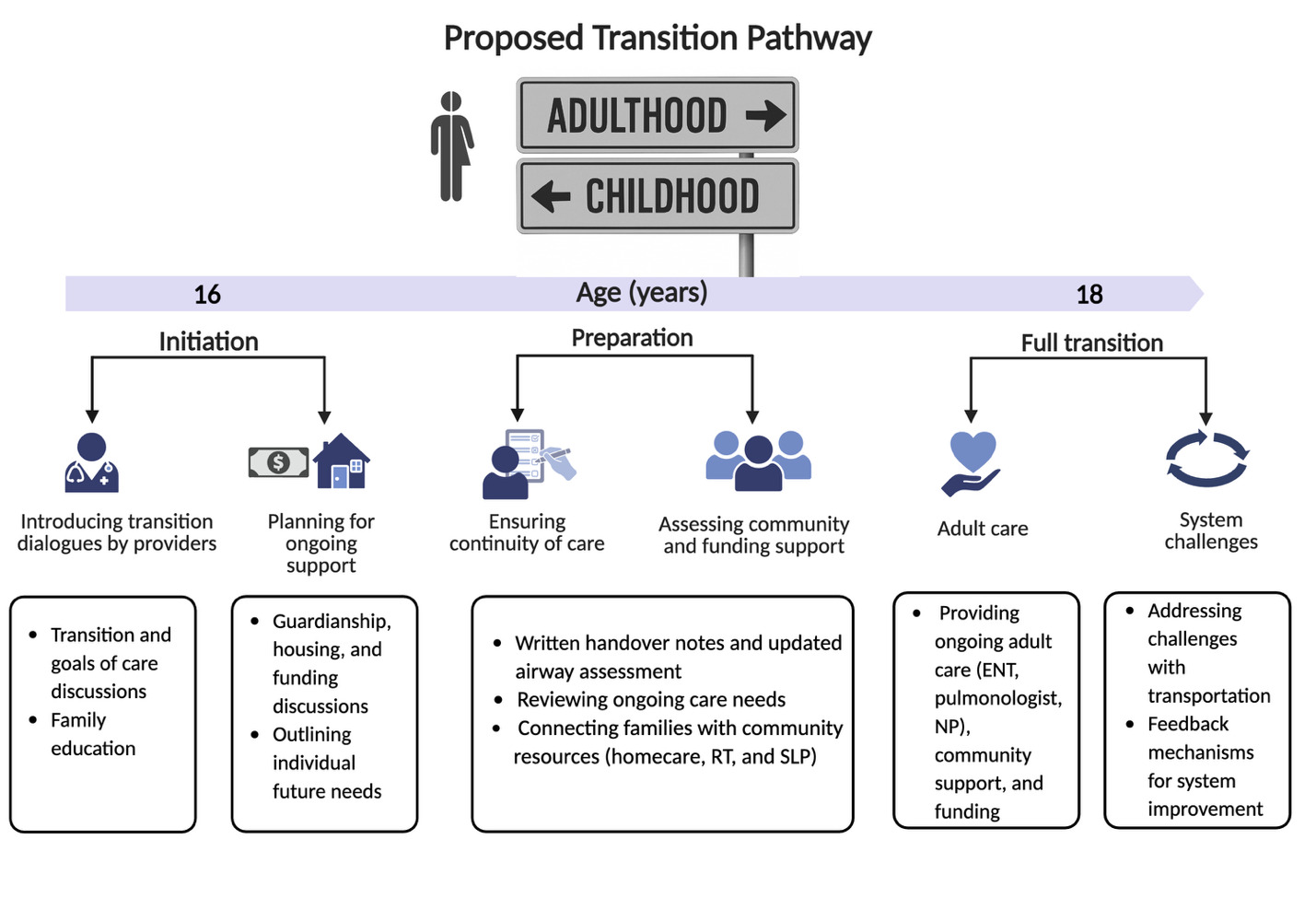
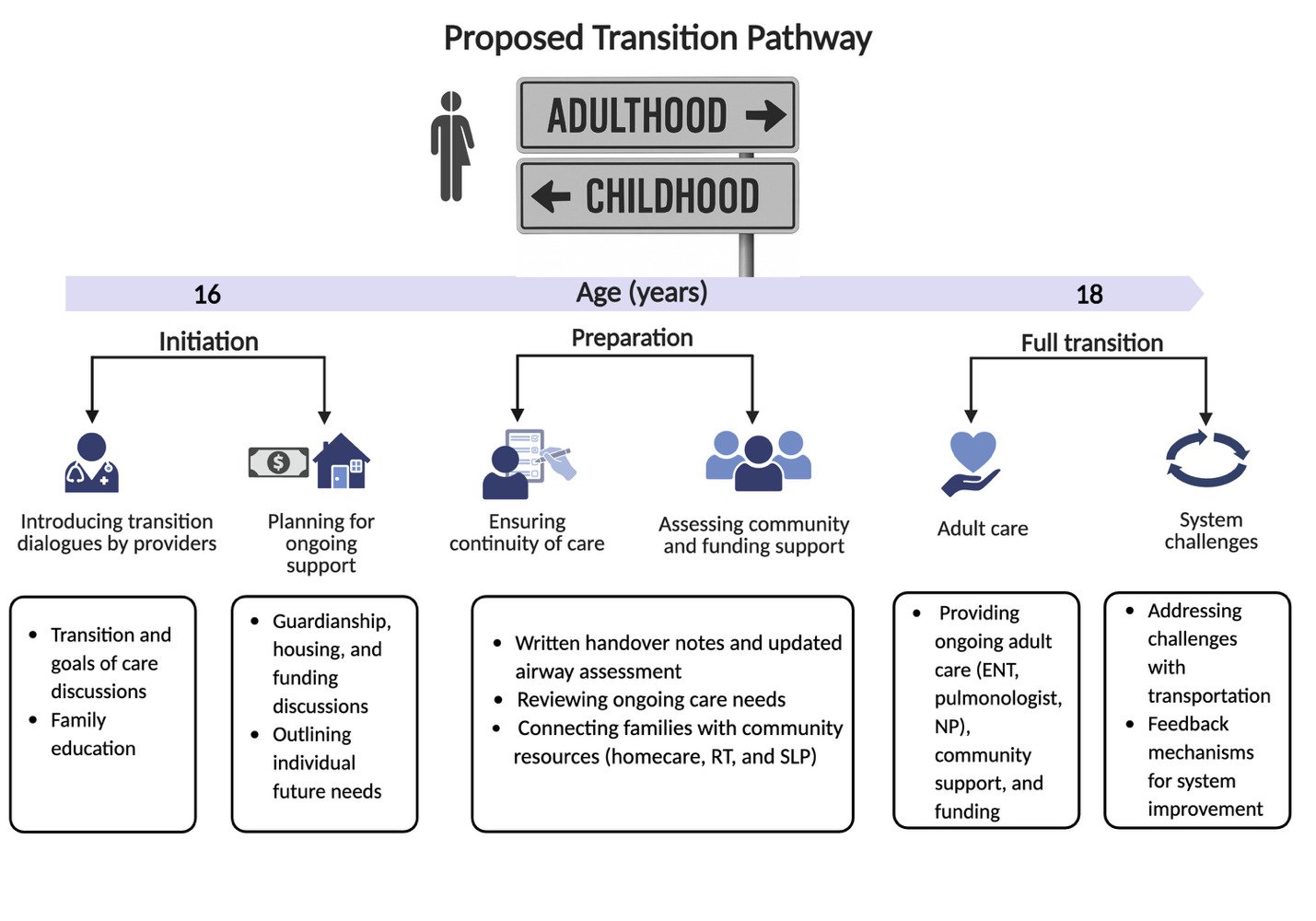
Across both caregiver and healthcare provider interviews, there was strong agreement that the transition from pediatric to adult care is characterized by a reduction in available supports. Caregivers emphasized the impact of decreased homecare hours and loss of familiar providers, while healthcare professionals highlighted broader system-level issues such as limited adult resources, fragmented referral pathways, and the absence of structured transition processes. Both groups identified the need for coordinated adult care and emphasized the importance of maintaining access to core specialists (ENT, pulmonology, respiratory therapy) and timely communication between pediatric and adult teams. Taken together, these findings informed a proposed transition pathway developed from themes identified across both caregiver and healthcare provider interviews. In particular, the pathway reflects recurring concerns related to early transition planning, coordinated handover between pediatric and adult teams, maintenance of home and respiratory supports, and the need for a clear point of contact throughout the process. It highlights the timing, personnel, and key elements felt to be important for a smoother handover between pediatric and adult systems, and a schematic overview is shown in Figure 1. While the transition process may also be shaped by broader factors such as physiologic changes as patients grow and evolving caregiving structures, the pathway illustrated in Figure 1 primarily focuses on system-level changes and coordination between pediatric and adult healthcare teams, which were the central themes identified in the interviews.
DISCUSSION
This study explored the experiences and priorities of caregivers and healthcare professionals involved in the transition from pediatric to adult tracheostomy care. These findings can inform practical strategies to strengthen transition planning, follow-up support, and continuity of care for children and families navigating this process. Both groups described transition as a period of uncertainty, characterized by fewer supports, communication gaps, and the absence of a clear structure to guide families. Caregivers spoke about the stress of losing familiar providers, the reduction in homecare hours, and the difficulty of navigating a more complex adult system. Healthcare providers focused on practical barriers, including limited system resources, unclear care coordination roles, and the challenge of maintaining continuity when responsibility shifts between teams. Despite these different emphases, both groups recognized the importance of a designated care coordinator, such as a nurse practitioner, to maintain communication, organize timely handover meetings, and support families throughout transition.
These findings reflect what has been described in other pediatric populations with complex care needs, such as those with cystic fibrosis, congenital heart disease, or neuromuscular disorders.3,8,12 Families in earlier studies have expressed similar feelings of anxiety and loss when moving from the familiar, team-based environment of pediatric care into the more fragmented adult system.17,18 The loss of long-standing relationships, reduced access to homecare, and inconsistent communication were common across both the literature and our interviews.18,19 Other studies have also pointed to the value of a dedicated care coordinator or transition navigator to bridge this gap and help families adjust to new systems of care.17,20 Our findings extend this work by showing that for tracheostomy-dependent youth, these challenges are even greater because of their heavy reliance on specialized home supports and interdisciplinary follow-up, underscoring how critical early preparation and communication are for a safe transition.
Both caregivers and providers emphasized the importance of a clear transition plan. Families felt that conversations about adult care should start early, so that expectations are set well before the actual handover. They described how last-minute transitions create stress and confusion, especially when communication between pediatric and adult teams is inconsistent. Providers echoed this, noting that a structured framework helps everyone stay aligned and reduces the risk of gaps in care. Similar to what has been shown in other chronic care programs, participants in our study supported having a formal plan that includes early goal-setting, defined timelines, and clear points of contact across disciplines.21,22
This study also demonstrates the value of a qualitative approach for understanding transition experiences from caregiver and healthcare provider perspectives. By allowing participants to describe their experiences in their own words, this method captured nuances in concerns, priorities, and expectations that may not be fully conveyed through quantitative measures alone. Engaging a small, focused sample provided an opportunity to explore these experiences in depth and identify themes grounded in participants’ lived realities.23,24 Because the interviews were conducted by a researcher outside the clinical care team, the process helped minimize response bias. This approach ensured that the resulting themes and proposed framework were shaped directly by the voices and experiences of those most affected by the transition process. While this study offers important insight into how families and providers experience the transition to adult tracheostomy care, several limitations should be noted. The number of caregiver participants was limited, which may restrict the breadth of caregiver perspectives represented and contributed to an imbalance between caregiver and healthcare provider viewpoints. Detailed caregiver demographic information and years of professional experience for healthcare providers were not systematically collected, which may limit how fully readers can assess the transferability of these findings to other settings. The perspectives included in this study primarily reflect the experiences of patients with family involvement and may not capture the challenges faced by individuals without consistent family support, such as those under temporary or permanent guardianship. These patients may encounter additional barriers during transition that were not fully represented in the interviews. The study was conducted at a single pediatric center with a small number of participants, which may limit the transferability of the findings to other settings. Adult healthcare provider perspectives were not included in this study, as the primary aim was to explore the transition process from the pediatric care setting where transition planning is typically initiated and coordinated. In our region, there is currently no formalized multidisciplinary pediatric to adult tracheostomy transition clinic. Transition planning is generally coordinated by pediatric providers, with referral to adult otolaryngology and respiratory services as patients approach adulthood. While collaboration between pediatric and adult providers does occur, the absence of a structured transition program may contribute to some of the communication and coordination challenges identified by participants in this study.
Future studies incorporating adult provider perspectives would offer additional insight into the challenges that arise after transfer to adult services and help further refine transition pathways. In addition, the degree of medical complexity among transitioning patients may influence caregiver burden and perceived stress, as the transition experience may differ substantially between patients with varying levels of respiratory support. It is also important to note that formal member checking, reflexive journaling, and a structured audit trail were not used, which may have limited further opportunities to strengthen the analysis. Because qualitative research prioritizes depth over breadth, some degree of bias is possible. Our interpretations may have been influenced by an awareness of the existing gaps in transition care, and the order of interview questions could have shaped participants’ responses. Even so, the alignment of caregiver and provider perspectives strengthens the findings and suggests that the challenges identified may extend beyond one institution. These shared experiences provide meaningful direction for how transition processes could be improved in similar clinical settings.
CONCLUSION
This study highlights the importance of a structured, family-centered approach to transitioning tracheostomy-dependent youth from pediatric to adult care. Both caregivers and healthcare providers emphasized the need for early preparation, consistent communication, and ongoing support throughout the process. Key components of an effective transition plan include initiating early discussions with families about expectations, holding a dedicated handover meeting between pediatric and adult care teams, designating a central care coordinator such as a nurse practitioner or family physician, and ensuring that homecare services are maintained or expanded after transfer. Incorporating these elements may improve continuity of care, reduce caregiver burden, and support a smoother transition to adult services. While some aspects of this process occur informally within our institution, a fully structured pediatric to adult tracheostomy transition program has not yet been formally implemented. The framework described in this study highlights key elements that may help guide the development of a more structured transition pathway in the future.
Corresponding Author
Caroline Jeffery, MD, MPH, FRCSC
1E4 Walter MacKenzie Hospital, Edmonton, AB, Canada
Email: caroline.jeffery@ahs.ca
Conflict of Interest
The authors declare that they have no conflicts of interest.
Funding
This study was supported by the Clinical Research Grant from the Department of Surgery, University of Alberta, and the Wynne Rigal Summer Research Award, University of Alberta.
Author Contributions
Hedieh Keshavarz and Sardeev Bajwa contributed equally to this work and share first authorship. Hedieh Keshavarz conducted the data analysis, developed the figures, and drafted the manuscript. Sardeev Bajwa contributed to data collection and data analysis. Stephanie Wilkes contributed to data collection and manuscript review. Steffane McLennan contributed to data collection. Caroline Jeffery served as the corresponding author and content expert, contributed to conceptualizing the study, participated in data analysis, and critically reviewed and edited the manuscript. All authors reviewed and approved the final version of the manuscript.
Acknowledgments
The authors would like to thank the caregivers and healthcare professionals who participated in this study and shared their experiences.